Sunday, June 1, 2014

Longer Breaks

So once in a while, we have to take a week break, or maybe, sometimes even longer than a week break. What's going to happen? Are your muscles going to shrink? Will they become weaker? Softer? Will you lose your tone? Your power? Your energy? The list is limitless, but it depends on how you take your break and for how long.
So sometimes, you just have to take a break that's more than a week long. Why? There could be plenty of explanations. But so to speak, sometimes those breaks are good for you.
   Now I don't advise, workout a month, take the next month off, and then rotate your exercise programs. But you have to take a week break as said every two to three months.
   As of suffering injuries in the past, and things of the like, I've had to take two, three, and sometimes four week breaks myself.
   Usually during the holidays with all of the hullabaloo that's going on and how busy things are, I personally take a two week break once a year. It's a good time to rest the body, let the immunities reevaluate themselves, and gives your muscles a break from that constant stress that's put on them. 
   Sometimes, if not all times, with a break that lasts more than a week, you're going to see gains in your muscles because they will have time to completely rebuild themselves. They won't be entirely accustomed to your workouts as they once were at the beginning of your break, so you will be pretty sore at first when getting back into things.
   Sometimes your joints could use a rest, your tendons, ligaments, bones, all of it. It's good to just take a rest that lasts more than a week once in a while. Find that time, maybe once or twice a year where you let your body completely repair itself, and when you get back into your workouts, you'll be a bit back, but feel a little better, and a little stronger each time. It's not like your muscles will go away, or get a lot weaker. What's a ten pound difference? You can get that back in a week. Take a break once in a while, let things get stronger where they need to. It's good for you.

The Leisure Time Hobbies

So as a person who loves fitness, you find joy and love in fitness as you make your body become stronger. But what about your leisure time and breaks from fitness? Don't you do something? I'd just like to talk about that.
Why not find something you like to do between workouts? There's plenty of opportunity if you have the time. Filming, music, art, writing. It's all there for you, you just have to explore your world of opportunity. Why not do it if you have the time? Nobody minds, it won't upset anybody if meanwhile when you're on a day off, you're sitting at home working on that novel, editing videos, doing photography, there's just a world of opportunity out there.
   And your leisure time hobbies don't have to be average. Unicycling? Breeding birds? Volunteering at homeless shelters, it doesn't matter much with what you do, if you put your time to good use, and don't end up feeling like all you do is, work, school, working out, ect...
   Discover what there is for you to do out there. There are plenty of opportunities and ideas. The things you will find yourself doing and loving may shock you. Find out if you like writing, maybe you have an easy time with numbers, you have the patience to make films because your work looks so good, it can go on and on. Just have fun with life, you don't have to spend it completely bored, find something productive to do with what you have, it's good to find something you like once in a while.

Saturday, May 31, 2014

Fingertip Conditioning

There's good reason to condition your fingertips. Planche push ups, handstands, making your fingers more resistant to breaks and possible injury that life so generously provides us fitness lovers with. And really, being able to say you can stand on your fingertips without lying, is pretty cool! I've got some good exercises that helped me out and a few other things I've been learning lately for progression in my fingertip balancing. And I'm more than glad to share these things with you!
The first exercise to start out if you have considerably weak fingertips, is going back to push ups on your knees, and your fingertips. Easy enough? Continue with those for about a week, let things get easy, because if you jump right into things, you can hurt yourself pretty bad to point of causing permanent damage to your hands.
   But bringing your hands to point of withstanding your entire body weight on your finger tips, is pretty incredible and beneficial to your body.
   So where do you begin when conditioning your fingertips for the superb strength you so desire? It's pretty easy, girl push ups. You know, the ones on your knees? It's not hard, and you can have control of the weight being dispersed into your fingertips simply by use of your back muscles if you're not quite there yet.
   You can do half of these exercises if you're not looking to stand on your fingertips but simply strengthen your hands.
   So when you get to the point of regular push ups but on your finger tips, do multiple reps, but not too many to the point of severe discomfort. It will hurt at first because your hands are getting used to your body weight being dispersed in such an unnatural way, but over time they will become stronger, more resistant, and less irritated by the movement and force being exerted into them as natural adaption to what they're being put up to.
   If you can't quite do things like, planches, or fingertip handstands and you're training to get into them, simply enough, you can stick to fingertip push ups, or just sitting on your fingertips in push ups position. Also if you become accustomed to those movements, you can try fingertip tuck planches, and fingertip L sits.
   Now for those of you looking into becoming more advanced with your fingertip balance, I'll offer some ideas and tips from my own experience in this.
   To reduce the amount of fingers you have on the ground with performing a planche or something, simply do the beginning exercises by reducing your finger count. You can easily bring yourself to a tuck planche or  straddle planche on three fingertips with each hand. It just takes time and practice, you can subtract a finger from each hand as you progress, and slowly but steadily advance.
   Now for the even more advanced terms of balancing on your fingertips, things like two finger balancing, thumb balancing, and balancing on your fingertips without your thumbs is incredibly difficult. But don't give up because you're going to be able to do it with hard work and determination.
   Now with the fingertip balance without your thumbs, just stick to push ups without them. I quickly figured out on my own that the thumb is the equivalent to about, four fingers. So just start out with push ups.
   Now two finger balance, the third finger that you have out acts as a stabilizer, so also consider some hard work with just doing the same exercises as advised with two fingers on the ground until you feel comfortable enough to support all of your body weight on them.
   Thumb balance? Well, that's up to you. Go through everything except for the thumbs free balance, even then do that because it teaches the control required, and work hard. 
   Good luck.

Friday, May 30, 2014

The Hardest Workouts

So maybe you've asked the question, what is the hardest kind of workout? An intense street workout? Or an intense weight workout? The answer is neither.

It doesn't matter if you're the man who can fly or the man who pick up a truck, the hardest workout you can possibly do, is the one that pushes you to your furthest limits for the longest time, also to be known as the workout that makes you progress, and become stronger.
   So when you start out, you can already be doing your best and getting the hardest work out! Because if you test your limits each and every time and take the time to make your body sore and respond to what you're doing with it, it doesn't matter if you lift weights, throw tires, do yoga, spin on your hands and head, or do triple back flips, (seen them done) it's all a matter of, are you working your hardest? Are you doing your best? Are you making what you can with what you've been given? That is the hardest workout, when those questions are all answered as yes. 

Monday, May 26, 2014

Stretching Thoughts

I've got some good questions that I've been thinking about on this. And have come up with a few conclusions throughout studying things concerning these matters. It's some obvious things, but just a few thoughts.
So generally speaking, if you want to be flexible, you have to stretch and do movements that improve flexibility. But there's a few reasons why some people have the issue of not being as flexible as others.
   It's pretty simple, some of us do not have muscles that are as soft as other people, or as loose, as stretchy, or as long. Generally speaking, if you stretch a lot though, you'll get a little stronger too in some ways since you're putting your muscles to their maximum potential like if you're doing a max weight lift or something.

Wednesday, May 21, 2014

Becoming Superhuman

Really though, superhuman is only a label, but the concept of it can be taken differently. When you become strong in some way that takes you to the point of being the exact opposite of average, you can consider yourself superhuman. You brought yourself to that point, and you can be proud of it.
You can reach your own limits of power. It's not too hard. The only thing that humans can't do is fly, and even then, we can come close to it!
   It doesn't matter how you access your power. You can do anything! Become so disturbingly flexible that you can go over a counter without touching it, or become a calisthenics king and learn how to squat on one foot on a tight rope, or go to the gym and learn how to pick up a barbell that weighs more than your car.
   I'm going to say all of this as if it's nothing more than just progressing to another grade in middle school because to me, becoming superhuman, is just second nature. I see it happen all over the place, and as I observe it, it makes sense to me, the human body's limits aren't what people think they are! They are so widely dispersed that it's incredible!
   It's pretty easy to become superhuman, you just have to work hard and you can do it. It's that simple.

Monday, May 19, 2014

Back Building

The back is probably the most powerful part of your upper body. You may think the opposite considering you cannot pull as much weight towards you as you can push away, but there are some things that your back does that your chest simply cannot do.
   Also, this is a post for weight lifters, so if the thought of iron plates and a long metal bar makes you faint at heart, you can still read this post.
Looking at the shape of your back, and how defined it becomes from exercise, and how powerful it looks, and the progression from it, is pretty amusing at times.
   You may not be too concerned about it, but when you think about it, you may not be able to see your back, but everybody else can. So why not work on it? There's plenty of reason to work on your back.
   Let's talk about aesthetic appeal first. When you work out your back, it gives you a powerful appearance, a large back will also result in a powerful look, and substantial pulling strength since the muscles in your back contract to make you pull.
   There are a series of exercises for you to do with a barbell that will make your back become large. Also, working out the back works out your rear deltoids and your biceps. So larger shoulders and biceps, every man wants that! And the occasional power lifting woman. You thought I was going to leave you out, didn't you?
   A large back ads to your upper body girth, thickness without having a big gut, and a powerful look. You also looked more balanced out with a strong back.
   Now let's move on to the actual results and requirements for a large back and building one.
   To begin, your back is built up out of multiple muscles. If you look at your chest, you have two muscles, and those are pectoralis majors. Excluding your arms of course. But I'm only talking about the chest right now.
   Your back has about sixteen major muscles in all that work together to pull things and hold them in place. And different ones work in different positions.
   So lets go from the bottom up. First off, you have your lower back. How do you work that out? Dead lifts and squats! And lots of them! As well as rows. Pretty much any kind of exercise where your upper body has to support weight while it's bent over. 
   The main exercise that works out your lower back is dead lifts. Your lower back doesn't get very big to begin with as of it just becomes incredibly powerful because it's a very dense muscle compared to others, it's the one that controls about half of your hip movement  if not more.
   Now to your middle back, that's also worked out with squats, but best with dead lifts and rows. If you ever look at weightlifters or bodybuilders from the side, they have a middle back from their various exercises that require support of serious weight.
   Now to get to the latissimus dorsi. There are some great exercises for that muscle. You have bent over rows, pull ups, lat pull downs, reverse dumbbell flies, T bar rows, and a number of other exercises. Your lats are triggered by three motions if I'm correct. Being bent over and pulling up towards your body, pulling down towards your body with your hands above your head, so either lat pull downs or body weight pull ups, and pushing downwards with with your arms. So that body weight lat pull up exercise I gave in one of my previous back workouts post, is a great exercise for that.
   Next you have your shoulder blade muscles. Not quite sure what to call those other than their commonly used name. Those are mainly triggered by the arms being pulled back and extending the pectoralis and contraction of the back muscles. Obviously. Also by the pulling motion done in pull ups.
   Then you have your traps, also known as the trapezius. This is one of the strongest muscles in your body to think about it. It's what holds your shoulders aligned and on your body when you are picking up heavy objects such as a barbell in a dead lift. So they can be worked out with shrugs, dead lifts, rows, and a number of other fun exercises.
   I would say that the reason the traps are so incredibly strong is because of how strategically they are placed compared to all of the other muscles in the body. For reasons of remained compact and not being hideous shapes and blobs of muscular structuring, the muscles in the human body are illogically placed, but made so incredibly strong that they can perform the challenges they are required to stand up to. But the trapezius is placed right on the shoulders, and contracts for a pulling motion bringing things upwards resulting in immense power.
   So just some thoughts on back workouts, enjoy!

The Fitness Cookie.

Thursday, May 15, 2014

Parallel Body and Straight Elbows

So in a previous planche tips post, I gave some good strength requirement tips and all, but it turns out I have a few more words on this.
So first off, in the picture, his toes aren't weird, it's just angle he's holding his feet at.
   To begin with, out of discovery for seeing things my self, the planche is so much of your frontal deltoids that it's rediculous with how strong they actually have to be to be able to hold you up in the first place with the position your put your hands in.
   To begin, if you want your elbows to be straight, your hands need to face diagonally outwards, to the point of your thumbs facing towards each other. This is for when you're still getting the finger tip planche down, but later on when you're comfortable with that, feel free to start experimenting with different hand placement and positions.
   Get the handstand and handstand push ups down for basic strength as I also said earlier on. But to be able to hold your body parallel with the ground, either try it out of a tuck planche, but lately I've been noticing it's just better if you lean forward onto your hands or fingertips and push your feet from the ground to the point of your body being parallel and holding that position as long as you can. The progression has been coming along a lot faster than when I started training.
   It's the general motion that you're trying to get down. At first it will feel like an entirely illogical motion because you won't be able to hold it even a second, but after a few weeks of practice you will start to notice differences and progression.
   Continue on my friends.

Strain Resistance and Recovery

So occasionally you will get into an exercise that is something you have never done before that is entirely new and different to your body and the strain and energy required will you leave sore and exhausted. So I'll give some tips on the recovery and how to build a resistance to it so it won't hurt anymore.

There's really a lot that will do this. And the worst is when it makes your bones hurt because of how hard it is on your on your body in the beginning.
   There are different things that makes us all sore and break our bodies down in individually different ways. Say you jumped right into super intense calisthenics. You do a series of different push ups that require your hands to leave the ground, you jumping squats, pistol squats, explosive pull ups and everything your body will allow you to do.
   You do so many of these things that by the end of the day, you're so fatigued and exhausted that you're limping to the car when it's time you go home and you can't walk right the next day, your body will be going through an massive recovery process.
   Exercises that are jarring to the body cause it to break down and then rebuild itself to the point of being able to recover from that exercise and also withstand it.
   There's a point of exercise where your bones will become sore as well as your muscles and you have to take a short break from things. What happens is that your bones have been broken down in small areas and sometimes micro fractures can develop. So you really have to be careful about certain things and take a nice long rest to let your body repair itself.
   But the good part about it is, is that once you are fully recovered your body is twice as strong. The same amount of exercise you had previously brought upon yourself will now be done with ease.
   Occasionally though, you will have to go through the same process of breaking your body down before you get into progression.
   You can also think of recovery as progression. Because when you recover the second time from something, it should not be as bad as recovering the first time. Make sense?
   So with recovery comes your resistance to the strain you put your body to in the first place. Making daily tasks and the occasional things that life puts you up against less of a hassle and even non tiring.

Tuesday, May 6, 2014

Lower Body Workouts With a Bad Back

There are a number of ways you can mess your back up and not be able to work out and do things like say, squats and dead lifts. Surprisingly enough, you can still work your lower body out with a bad back. The simple steps are to be followed carefully. Keep in mind, I'm only concerning soreness and light injury that won't be strained any further in the following steps. If you're back is really out, or damaged, I recommend you see a specialist.
Yeah, sadly that picture isn't me. I don't have tattoos and my Chuck's are black.
  So if you end up with a bad back, and can't work out, you have plenty of options. I've personally discovered a number of them when my back went out a while back due to a muscular injury and I could not do much that involved my lower and mid back supporting my upper body with more than ninety pounds. So what did I do? I used light weight and did things that you can only do with light weight.
   For instance, regular squats. If you're not much of an endurance specialist in your work outs, give it a try if you ever get in a bad situation with your back or something. Do a few hundred body weight squats. Also pistol squats, they build muscle and teach your body balance and control.
   Jumping squats as well, jumping lunges. Find a field at the park or something, and just jump across it until you literally can't move your body any more. Take a rest, and do it again.
   These are high circuit exercises that don't offer too much stress for your back to deal with. You can maintain a strong and toned lower body during the time of a not so bad back injury with exercises that don't require any kind of weight transfer into your shoulders.
   I will say that it takes time to get used certain exercises, but all in all, they really do work until you can go back to the gym to snort and groan and throw plates all over the place.
   So yes indeed, it is possible to get a good lower body workout with a bad back. You just have to look around at exercises and think until you find the right ones that leave you sore.

Monday, April 28, 2014

A Little Motivation

There are normal techniques for motivation, and abnormal techniques, and then there are that one and only brainchild. So what do you do to get motivated for a workout? Let's figure that out for you.

Personally, myself, and friends, will just go on youtube, watch a few videos, get in the mood, and think, "I want to do that!" And we go work out and get ripped and stand upside down on our hands and crud.
   Other people, they go to the gym, see somebody really good looking of the opposite gender and something happens to their muscular structure and they can suddenly lift six times their weight. Whereas others they just simply have the idea of, "do it or get C.O.P.D."
   So it's up to you. I usually think a lot about how great I look after my workout and how great I feel as well. That's usually the main motivation process with your average Joe who likes to workout. So just find your brand of motivation, what's the one thing that makes you feel like doing something impressive? Soon enough you'l find it and you'll get to where you want to be soon enough with your hard work and dedication.

The Fitness Cookie

Softer Muscles Vs. Harder Muscles

Do you ever wonder why your chest gets sore a whole lot easier than your calves when your calves are  actually smaller? I've got a good explanation for that.
So your calves are the hardest muscles in your body. That's obvious unless you're not to familiar with human anatomy, then surprise surprise.
   Look at your chest for example, you only have to spend maybe thirty minutes out of your day working on it, and then the next day you're sore. Now take your calves for example, you spend your day standing on your feet, your calves are the first muscle to work in your legs when you walk, they take in the shock of each and every step, and when you work them out, you have to use three times the weight you use on your chest, plus your body weight, and twice the amount of movement to get the same results as you would see in your chest.
   If the muscles in your chest and your arms were as dense as the muscles in your calves, the average human being would begin chest and arm workouts with about three or four times the weight and about twenty times the endurance.
   Now I'm not positive if that's entirely correct, but from what I gather, the strength differences would be incredible.
   Therefor, you require far harder, far more demanding, and far more endurance requiring exercises to break the harder and stronger muscles than to break down the softer ones.
   If you think about it, during a workout, your muscles are flexing, stretching, and being brought to their utmost potential. So when they stretch like that, there are multiple little strands of muscular tissue that snap and break with each and every press, push, pull, lift, and raise.
   Your muscles that are harder than others, like your calves for instance since those seem to be the densest of the group, it's a very requiring process to get those muscles to break down and get those tiny strands to break and pop so they come back together with more and make themselves larger and stronger.
   Now your softer muscles, like your lats, lower back, and biceps, require a less stressful workout. Because those strands aren't as thick and hard as the ones in your legs. If you did the same workout that you do with your legs with your upper back, the size differences would be immaculate because the softer muscles that require less strain to become larger would react in a more dramatic way, resulting in massiveness and your leg muscles would be equally strong, but in proportion, nowhere near as large.
   Imagine when you started running, the first two miles your legs were pretty sore, but imagine if you did that exact run on your hands. Which workout would make the most sore?
   So there's a reason for heavier leg workouts, your legs are designed for constant twenty four seven every second of the day use, your upper body isn't quite like that, it's meant for holding smaller things, that aren't all of you, and picking up stuff, helping out with balance.
   It's just something to think about.

The Fitness Cookie

Saturday, April 26, 2014

Fingertip Strength

So you may have a concern as how to make your fingertips stronger for things like planche push ups and so forth. Here are a few tips and ideas to follow.
For those of you who are obsessed with body weight weight training, your fingertips are sure to be an important factor in your exercises.
   I advise you build up into this because the moment you try a fingertip planche for the first time without any fingertip strengthening back ground, you'll fall, and might possibly injure your fingertips or your hands. Maybe even both.
   You can strengthen your fingertips by doing regular push ups on your fingertips, and then move into regular push ups on three fingers on each hand and things like that. If you can do hopping push ups on your fingertips, you ought to be ready to start attempting fingertip planches and fingertip planche push ups.
   Also, a small pointer, you may be asking why I emphasize on the planche for exercise so much. That would be because it is the best exercise for body weight training that involves your pectorals and shoulders. And also it's a heck of a lot of fun and there are a ton of variations I have yet to teach you.

Thursday, April 24, 2014

Exercise Replacement?

So I've been looking around, and seeing some questions, "Do you replace regular push ups with those kinds of push ups after a while of doing them?" And, "Do you replace pull ups with your other kinds of workouts like that?" It goes on and on.
Generally speaking, we calisthenic kings get to a point in our thrones where we think that regular push ups are no longer necessary. I'll tell you right now, that's up to you.
   Say all you can do at the moment is handstand push ups, you're working for planche push ups, but you notice that your shoulders are becoming far larger than your chest, and that's not something you want to happen.
   So what are you going to do? Push ups. They will give you the structural balances that keep your body working normal up until you can do those exercises that you want. Afterwards though, it's up to you to drop the conventional exercises, but adding those with the more strenuous exercises that you can't do so much of yet, help a lot and keep you progressing faster and easier up until you are where you want to be. So really, it's your choice.

Tips on Jumping Height

There's a good deal of preparatory exercises to help you build up to the point of being able to jump as high as you want to. Here are some tips.
Jumping is like one big squat. It also helps a deal with your flipping height. Exercises that you can do are things like squats, pistol squats, jumping squats, and jumping lunges. Also, weighted squats help with jumping height. Since squats are a jumping motion without your feet leaving the ground, I'll stress those the most since they're the best exercise for jumping.
   If you don't have access to weights, there's always the body weight alternatives. You have squats, jumping squats, pistol squats, and those weird lunge variations. Doing things like jumping as high as you possibly can as many times as you possibly can across your backyard or something would be great for getting height gain. Practicing the motion helps a lot.
   Now that I've covered stationary jumping height, we'll talk about momentum now.
   Do you ever see people break dancing, doing parkour, tricking, gymnastics, or just plain showing off and wonder how they could possibly get so high? There's an art to it.
   Momentum is where it all comes from first of all. Running is the key part to getting your height, but remember that punch I talked about in front flips? Same thing with running and jumping as high as you possibly can. Slam dunking a basketball is a different story because you can't throw your hands, but with general jumping height to do something like a divers somersault where you run and jump as high as possible and dive into a somersault.
   Or generally running and jumping over something. How hard could it be? It's not very hard, but to gather momentum and get some decent height, you have the glide, the punch, and the crunch. The crunch is when you crunch your legs in to avoid additional objects or whatever. Usually it's a natural response, so it's not too hard.
   Good luck.

Wednesday, April 23, 2014

Joint Protection

There are some intense things humans do in their lives. Generally speaking, our bodies are incredible because they heal from and deal with some hard hits and heavy stress. To be able to deal with those hard hits and heavy stress, your joints have to be strong, hardened, and healthy.
   Weak joints will give way under you, they'll creak, and cause serious damage to your body.
Joints are different than muscles. You break your muscles down to make them harder and stronger. You exercise to keep your joints stronger and harder, but once they start losing cartilage which is like an incredibly hard and complex plastic that lubricates itself, that's the last you see of it.
   So how do you keep your joints in proper working order? You don't let them get weak. Weightlifting, calisthenics, and any other kind of exercise will do a lot of good for you joints.
   Remember, proper dieting as well is good for your joints. You just can't load up on stake and potatoes constantly, supplementing with other foods and making them part of your regular diet will give certain oils and vitamins that are required for strong joints.
   Exercise should never be painful, avoid it by keeping healthy joints.

Monday, April 21, 2014

Back Workout (From the top down)

Back workouts consist of contracting your back muscles, obviously.

There are a lot of ways to get a big back. Luckily, when you lift weights, you don't have to workout your biceps so much if you have a good back workout. It's just a good shoulder and chest workout.
   Things like barbell rows of course, dumbbell rows, barbell shrugs, and dumbbell shrugs are good for your back. Always give the lat pull down machine a try or two as well. Weights are always good, so don't forget those. And religiously rep hard and heavy on those blessed dead lifts.
   Now for the consideration of body weight exercises for the back. What do you do for lower back exercises as far as body weight goes, and you don't have a roman chair? We'll talk about that.
   Pull ups of course are good for a back exercise, have your friend hold onto you at the same time, do lever pull ups, there's so much. So what levels do we work with? Easy. Intermediate. Advanced. And Very Advanced.
   Why capitalize it? Because it's important.
   Some tips on avoiding blisters for beginners, either wear gloves, or man up. Rubbing sand on your hands if you don't have chalk does help with the grip.
   
Easy: 
1. 5 Sets of 3 Pull Ups. Remember to keep a good grip.
2. 5 Sets of 5 Body Weight Rows, find some kind of bar that's a little less than four feet off the ground. Keep  your feet in contact with the ground.
3. As many pull ups as you can do at one time.

Intermediate:
1. 5 Sets of 5 Pull Ups.
2. 3 Sets of 10 Body Weight Rows.
3. Tucked Front lever. (not very hard)
4. 4 Sets of 4 Lat Pull Ups.
5. As many Pull Ups in a row as possible.

Advanced:
1. 3 Sets of 8-10 Pull Ups.
2. 3 Sets of 15 Body Weight Rows.
3. 4 Sets of 5 Tucked Front Lever Pull Ups.
4. Front Lever.
5. 5 Sets of 5 Lat Pull Ups.
6. 5 Sets of 5 Muscle Ups.
7. As many Pull Ups in a row as possible.

Very Advanced:
1. 4 Sets of 20 Pull Ups.
2. 2 Sets of 5 Front Lever Pull Ups.
3. 2 Set of 25 Body Weight Rows.
4. 4 Sets of 8-10 Muscle Ups.
5. Front Levers, lots and lots.
6. 4 Sets of 10 Lat Pull Ups.
7. 2 Sets of 5 One Arm Pull Ups.
8. As many Pull Ups in a row as possible.

This should probably give you a pretty decently sized back, and targets just about everything in the upper back.
   You can separately do you lower back exercises. If you have something heavy that sits on legs by chance, say a heavy couch, large armoire, or just a really big friend, stick the backs of your feet under something sturdy, and you can bend at a perfect forty five degree angle at your knees, and bend over repetitively.
   Also, super mans, dead bugs, whatever you want to call them, where you lay down on the floor and lift your feet and hands, you can do those, hold them, do them in reps, have people push on your feet and hands. Whatever floats your boat. Enjoy your workout.

Friday, April 18, 2014

Energy At Your Disposal

There's talk about, quote, "Oh! How I need caffeine!" I find this topic humorous because humans are naturally meant to not need caffeine. Your energy should come from a good diet and exercise.
There's something exercise does to your body that gives you more energy. What it does is makes your body used to motion and exertion that's far harder than what you're doing as you go about your daily affairs. When you do things that are very hard for your body, the easy things, like sitting in an office chair, are incredibly easy for you.
   I know what you're saying, office chairs are tiring! That's true, but since I've actually never sat in one for more than two and a half hours concerning monetary purposes, so I wouldn't know.
   Energy opens up your world of opportunity, the more you have the more you can do and the longer you can do as well as be able to concentrate and focus as best you can. Through the proper clean and healthy life style, you can obtain the proper energy required for building your body to the point of having the physic and mind you so desire to acquire.

Thursday, April 10, 2014

Strength and Flexibility Combined

So do you ever wonder about being strong and flexible at the same time? Well I can offer tips, not from a professional perspective, but things that will help a lot.
So in actuality, you can lift weights, do four hundred pound dead lifts, three plate bench presses, and heavy squats, but still be able to touch your toes, do the side splits, stick your feet behind your head, and do an air chair.
   It's very simple, you just have to incorporate a stretching program into your workout program. Make sure you do it warm, remember not to bounce in stretches, and you can always do moves that require flexibility, and strength at the same time. Those moves are a great workout for us all because they work the muscles out while putting them to their max potential. So it's in reality, a double benefit.
   Now things like middle splits for guys who do incredibly heavy dead lifts and squats will be a serious challenge because of how tight your hamstrings become from those movements. So they'll either be extremely challenging, or impossible. But with hard work, you can make just about anything possible.

Tuesday, April 8, 2014

Exercise No. 27 Rolling Planche Push Ups

This is an exercise few know about, takes substantial strength, but not as much as say real planche push ups do. A good preparation exercise for planche push ups though, and very helpful.
So I'm going to say it, you're not going to be able to do these on the parallel bars. It simply doesn't work that way because the ground is required. So the rolling planche push up, is like a stationary worm. So if you know how to do the worm and push yourself off the ground somewhat, you can do this.
   The prerequisites are important because this is an advanced intermediate exercise. If you have no upper body strength to spare, go back and learn to do about forty or so push ups in a row and then you can learn these.
   So you want to start out like you're doing a beached seal stretch. Lean backwards while you lie stomach first on the floor. Now comes the hard part. Roll forward, and as you roll forward use the momentum from rolling onto your hands to push you up. 
   When you're at your highest and are about to come down, bend at your hips like you're doing an L sit/pike. Don't do this too fast or you'll end up stubbing your toes on the floor unless you're wearing shoes. And keep in mind, if you have jeans or a belt on, the button or the buckle will make these a whole lot harder for you unless you pull your pants up to your mid section.
   Now you're back to your feet, leave your legs limp but don't let your knees bend much when your back onto your stomach and then your hands. You generally shouldn't bend at your knees too much though. Just repeat the entire process and there you go, rolling planche push ups.

Saturday, April 5, 2014

Non Damaging Workouts

So if your going to workout nice and hard, and make yourself incredibly sore, don't damage your body. There's recovery time, and then there's healing time. To avoid healing time and stick to recover time, you have to work out high circuit, but not overly aggressive.
You work up to your limits, and pass them barely. Each time you will progress, progression is a slow but steady process, something that takes weeks to get places, months to start seeing what you want, and years to be where you want.
   Your energy output should not be what you're comfortable with. For those of you who are starting out, exercise will not be comfortable at first. But you shouldn't work until it hurts. You need to be comfortable with the pain you have from working out. For instance, leg day.
   Let's give an example of leg day. Leg day hurts, always. But! That's why it's good! When you do leg day, you have to work until you can't squat dead lift and lunge any more. Do something very high circuit, and then do a warm down with something lighter, something easier, and keep going until you feel good with where you're at and you're not in pain, during, your workout.
   If you're in pain during your workout, you're not doing things right, at all. Straining, holding your breath, popping blood vessels, and making yourself sick with the amount of weight and repetitions, you have to be careful, but with the right amount of intensity to the level you're not comfortable, but not in pain with, will take you where you want to be.

Tuesday, April 1, 2014

Flexibility Progression

It's to be said that when you start out not so flexible, it's hard to become flexible. Well, it depends on how you work on becoming flexible. Starting out cold, and stretching until your warm enough to stretch just doesn't cut it because over time you'll get tired of having to wait so long to get all warm and then you'll have other things to do because it's taking too much time and work on your behalf. So I'll offer some tips on becoming flexible.
Whenever you say flexibility to somebody, they usually think along the lines of splits, you know, leg flexibility, which a lot of people lack. But having flexibility in just the legs is kind of stupid when you can be flexible and many other places if you think about. Right?
   So why not work on becoming flexible in other places? Why not do something that a lot of people don't think to do?
   Now like I said, you've got to be warm before stretching. Get some good lower body cardio in before stretching your legs. In honest opinion, I find the legs to be the hardest part of the body to stretch because it's more painful training for splits than it is for say air chairs or flag freezes.
   When stretching your upper body, it's a little different, going for a run or something won't do because that's your lower body and lower core that you're stretching. Warm up everywhere, yes, good idea, but generally speaking, if you're getting into shoulder flexibility for hollow backs, flag freezes, or airchairs, and general flexibility, give your upper body a bit of a work out. Enough to make it warm, not to exhaust it since you'll probably be using your remaining strength in only a matter of minutes.
   My favorite exercise to warm up with is push ups. Before a shoulder stretching routine, I'll crank out a few push ups for some additional light warming up, and then a few handstand and planche push ups for the heavy warm up.
   But it all depends on your style of warming up, find which exercise works best for you, get the blood flowing in your muscles, and then do advised stretches for whatever feat of strength or flexibility your trying to accomplish.

Sunday, March 30, 2014

Hand Balancing Tips

Some things are just hard to do unless you have a gift for them. So to get good, you work at them and take tips from as many people as you can talk to that know how to do it. So I'll give you some good tips of my own that helped me out.
Lets work from the ground up.
  Your forearms. Your ability to grip the ground must be substantial. Both sides of your forearms need to be equally strong according to their proportions to balance out the resistance required.
   Your Triceps. Without the power of your triceps, your elbow/elbows would simply buckle and you'd fall over. So make sure to practice and make yourself better with a series of tricep strengthening exercises. I do not advise that you go for weight training with your triceps for hand balancing, for strength and size, you do weight training, but with hand balancing, you can body weight muscle isolation while you work out other muscles. Everything is meant to be worked out in groups.
   Your shoulders. Your deltoids are incredibly important. Your shoulders are the other part of your arms that decide how long you stand. So work those out, by standing on your hands.
   Your core. So in hand balancing, say you're standing on one hand, there are two parts that hold you up and steady. Half of it is your arm, and half of it is your core. Believe it or not, your arm may be the thing holding you up and off the ground, but your core is just as important. Without a strong core, you'd be all floppy and fall over. So, do core strengthening exercises, those are important, and do stupid things when you practice hand balancing, not things that'll get you hurt, but try out new things and those will make you stronger and you'll be able to hold those older positions better than you last were as you progress into the newer ones.
   Another thing I learned when getting into hand balancing is that you need to thrust your chest out, and arch your lower back as much as you can. Naturally your body will hold at an angle when standing on one hand because when standing up with something above your head, your back muscles are required to engage, but when you're standing on one hand, it's different because your upside down and you're balancing something much larger than plates of metal put on the ends of a metal dowel.
   It's also good to have considerable leg flexibility unless you're incredibly strong and can just hold yourself up without a problem. You should be able to attempt the splits and at least be able to have no more than five inches between the ground and your groin. So you may have to stretch before you get into hand balance practice.
   I'll say that your entire body is like a giant box of pineapples as far as weight dispersion goes. But luckily we've been designed to balance that awkward weight different muscles put just in the right place at the right time made to work on cue with the proper amounts of energy being produced.
   Following these tips will you help with getting things like one handed handstands with a foot tucked in, lotus one handed handstands, flag freezes, hanging air babies, and if you're a nutter, one handed planches. Which I'm actually working on, so just for you to get a little inspiration going here for your one handed hand balancing, go on ahead, try to learn it before I put up a post.

Thursday, March 27, 2014

Exercise No. 26 Pull up bar pull over

An exercise that targets lats and pectorals at once... well I have it for you.
Simple enough, you hold  onto the pull up bar and keep your arms straight to some degree, it's okay if you have a little elbow bend. This is all about pulling up without bending your elbows.
   Don't pull, but push down. As you come out, it should feel like you're doing a front lever, but your feet need to be pointing down. Just push enough to go up, and keep the tension as you go down.
   This is also a good prerequisite to have down prior to muscle ups so you can get yourself up for the maneuver to pull yourself above the bar. Work on it with bent elbows, and so forth. Good luck.

-The Fitness Cookie 

Saturday, March 22, 2014

Start Now or Start Never

Here's a good question that's asked a lot, when should I start working? Yes, I've discussed this topic a time or two before. But, it's good to touch up on at least one or two more times. So when should you start?
Do you need to start? Do you already work out? Then you don't have to worry about starting a workout unless you're starting a new work out for different results and gains. But that's something else to talk about.
   Now this goes for people who just do one kind of workout, like running, or cycling. What you're doing right there is good enough to keep alive for a long time, so you don't really have to worry about starting up a new workout unless you just want to look better.
   So, start your workout, start it now. Do something new, and become stronger in different ways.

Wednesday, March 19, 2014

Disclaimer Post

My disclaimer post.

This blog is a general fitness blog where I talk about anything concerning fitness and health. Certain movements in this blog that are taught are very challenging, and dangerous if the participant is not ready for such a movement, or doesn't know how to do it properly, or has physical limitations of any sort.
   I am not a certified fitness coach, all advice is only told to the best of my abilities and knowledge.
   Therefore, I take no responsibility for any possibly sustained injuries, I disclaim ownership and give all credit to any images that may be subject copyright, and any links to videos that are not made by me.
   Enjoy your workouts.
   
The Fitness Cookie.

Chest Workout (From the top down)

So, the chest, something a lot of people are concerned about because you can see them in the mirror, and they look pretty good when they're sculpted with the proper work outs. Let us begin?
You can either go for simply looking good, which is the concern mainly of women. So you must incorporate a pectoral workout into your program, and you will be happy and good to go with what you have. Now, if you are male, your concern is to build muscle and become incredibly strong, well, incorporate a high intensity workout, something with a lot of weight, a lot of body shock, something that you know will make you sore. 
   The exercises that will cause pectoral shock if you will in body weight exercises are things like super man push ups, triple clap push ups, planche push ups, lots of tuck planche push ups, and various other things that involve pectoral contraction for the motion to be completed. Who knows, maybe you have your own weird exercise that works out your chest.
   Here are my workouts, varying from, easy, intermediate, advanced, and very advanced.

Easy: 1. 20 Push ups.
         2. 5 Clap push ups.
         3. 10 push ups.
         4. 15 Incline push ups.

Intermediate: 1. 50 Push ups.
                    2. 10 Clap push ups.
                    3. 30 Incline push ups.
                    4. 25 Push ups.
                    5. 10 Push ups with hands as close to hips as possible.
                    6. 10 Diamond push ups.

Advanced: 1. 100 Push ups.
                 2. 25 Clap push ups.
                 3. 15 Chest tap push ups.
                 4. 5 Back clap push ups.
                 5. Planche practice.
                 6. 10 Tuck planche push ups.
                 7. 10 Clap behind back push ups.
                 8. 10 One arm push ups on each side.
                 9. 30 Diamond push ups.
              
Very Advanced: 1. 150 Push ups.
                          2. 40 Clap push ups.
                          3. 25 Chest tap push ups.
                          4. 5-10 Triple clap push ups.
                          5. 20 Planche push ups.
                          6. 20 One arm push ups on each side.
                          7. 50 Diamond push ups.
                          8. 50 Tuck planche push ups.


Now feel free to incorporate weight lifting into this, that helps with general body weight strength and core stability. Weight training is good in general, so keep that in mind. Enjoy your workout.

Friday, March 14, 2014

Bicep Workout (From the top down)

So your biceps, located in the front part of your arm that guys usually brag to their friends about every time you do a series of curls with 20 pound dumbbells. These muscles can become considerably large with a series of calisthenic exercises and weight exercises.
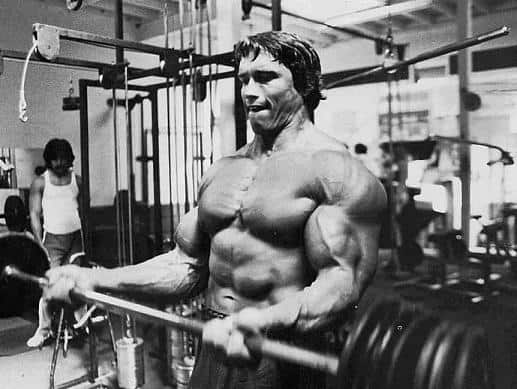
Now I'm not saying you have to look like that guy, if you do, good for you. But the idea is to gain strength, and get some toning done in the process. You don't have to work so hard to where you're borderline popping veins and crap as well as being sore all of the time.
   To make your biceps stronger, it's not that hard, just a simple workout, usual circuit of working out, and proper rest since you're going to be working all of your other muscles out.
   Weight training makes your biceps become larger, by far more than you can fathom by just doing pull ups and levers. It's considerably simple, you just have to do a high circuit, high intensity, high resistance, high weight, program if you want your biceps to swell.
   So I have the four usual levels concerning intensity levels and so forth. The first two are good for people just looking to get in shape, and the last two are hard, and very hard.

Easy: 1. 2 Sets of 3 pull ups
         2. Do 1 pull up, stop when all of the way up, and hold for 5 seconds 3 times.

Intermediate: 1. 3 Sets of 5 pull ups.
                    2. 2 sets of 2 L sit pull ups.

Advanced: 1. 4 Sets of 10 pull ups.
                 2. 3 Sets of 5 L sit pull ups.
                 3. 5 Muscle ups.
                 4. 5 Archer pull ups on each side.
                 5. 2 Front levers each for 2 Seconds.
                 6. Try a back lever, doesn't really matter if you can get it yet or not.

Very Advanced: 1. 4 Sets of 20 pull ups
                          2. 3 Sets of 10 L sit pull ups.
                          3. 5 Sets of 5 muscle ups.
                          4. 3 One arm pull ups on each side.
                          5. Hold 6 front levers for 5 seconds each.
                          6. Hold 5 Back levers for 5 seconds each.
                          7. Hold pull up position for 10 seconds on one arm on each arm.

Now like I said, feel free to get involved in weights, workout your muscles with free weights as well to work your muscles out. Get a feel for things, and progress in both ways. 

Hollow Back Tips

I thought I'd give a little advice for the few of us who actually do these so that you can know how to do these a little better by holding them longer and extending both legs.
You have the beginner hollow back, where you tuck one leg in, and both knees are bent and your legs pretty much hang and you're suspending yourself by strength and resistance of your arms holding you up at the shoulders.
   Your shoulders not being able to bend back and around is the cause of being able to do a hollow back in most cases. But to progress, all around strength is the most required of being able to do a good form hollow back.
   Your shoulders and triceps are where your balance begins. If you can do a handstand, your triceps are generally strong enough, but your shoulders have to be incredibly powerful. Like I said, it helps a lot if you can do handstand push ups, and a hollow back handstand. Not the kind you see in the picture, but like a regular handstand, just with your back arched and you leaning backwards. It's important you be able to lean backwards on your hands, not forward to where your wrists are coming to a sharper and sharper angle, but to the point of where the angle in them is easing up and they're straightening out more than when you're in a regular handstand.
   Now being able to lean backwards with both legs out, so much as being able to do it without much of knee bend, your mid and lower back have to be incredibly strong. You can perfect this with head hollows easily, but in the real hollow back, your strength and energy are going into your shoulders, triceps, upper back, lower back, mid back, abdominals, and everything else much more since you don't have your neck which is very stable to support you in this.
   The only thing I can really say to get a stronger back for this, is that you just need to practice. Do neck bridges, those help, and a good stretch and exercise is to do bridges, but push back onto your hands as far as possible to where you have less weight put onto your feet. Lean as far as possible without falling backwards, get to your maximum point, and hold it as long as you can. Push yourself further each day and your back will become stronger and stronger.
   Also, another way to get into these and practice them is to go into an inverted hollow back, and then just ease your legs out. It's hard to hold it, but you will be in the position and a place that you can hold it.
   And remember, to get good at something, you have to practice all of the time. Set up a program for practicing and keep trying until you get it.
   Good luck.

Wednesday, March 12, 2014

Form Perfection

The most common mistake in exercising is lack of form. It's also a cause of injury, imbalances, and loss of gains. So to avoid those issues, we must come to the conclusion of perfection in exercise form.
Plenty of exercises that are done wrong can result in pain, discomfort, and imbalances. For instance, if you tend to lean to one side while doing push ups, even by just a little, there are two things that can happen. First you will see imbalances, and then because of certain alignment muscles that are being engaged, your spinal column may end up being put out of line causing neck pain, and discomfort which will also lead to limited movement because it simply hurts to go the direction that you're out of alignment.
   Your form has a lot to say when it comes to impressiveness in showing your feats of strength and body movement. You could be the strongest guy in the group that has the most power, and be able to lift the most weight, but you could also have the worst form.
   Bad form in weight training also can lead to serious injury. Mainly because weightlifting is a sensitive topic due to the fact that if you do something wrong, you're going to hurt yourself. Weights are far more sensitive in terms of injury than in calisthenics because it's a weight that doesn't belong to you, your body is learning how to balance it in a different way, and if you mess up, well there goes six weeks of gains and delicious protein shakes.
   Either way, perfected form is a necessary part of exercise. The reason they call it good form is because it's the best movement for you, the most challenging, the most beneficial, and the safest.
   Now the next question is, is it dangerous to get into a good form? Because when you start out, your form is bad and you have to work on getting better at it, so that makes it dangerous right? Absolutely not.
   There are a few examples I'm going to share with you. Lets say you have bad form in weightlifting, you're really strong and can dead lift three hundred pounds, but your back bends and creaks like mad. You stop, that's damaging to the spinal column, so where do we go from a situation like this? You go to a lighter weight, you straighten your back, squat lower, and if needed, get a coach or somebody who works at the gym to help you out.
   Planches, another thing, is it dangerous to start out with bad form in those? No, not at all. Because it's bodyweight, and if you do a planche wrong, you might as well be doing a handstand. So to perfect your form, you watch yourself and observe, clean things up, start out from different positions to see which one you get your best form from and so forth.
   Form perfection only takes observance, a few steps back, clean up the old steps, make them look good, and work back up to where you were. Sure it'll be a little harder than you last recalled doing those exercises, but because you're paying attention and looking at the way things are done, and you notice you're actually looking better in your form, it will become less of an issue when you try to do it with good form, because you will be used to doing it with good form instead of bad form which will actually be harder.

Thursday, March 6, 2014

The Best Thing For Us All

Here's something for you to think about. You don't have to choose just one thing to focus on, be it exercise, music, writing, art, or whatever it is you do. You can do as much as you want to do.
I've met people so involved in doing what they love that they have absolutely no time for the boring mundane things in life that most people consider living. Whereas these people that are doing what they love, are the ones that are actually living life.
   You could be a couch potato, or the guy or girl who's riding two hundred miles on their bike every Saturday, working as a music veterinarian during the week, feeding homeless children during your after hours, taking your family across the country in an RV during the summer time, skiing down mountain sides in the winter, and constantly unicycling with any possible chance that comes your way while you go down the book club three times a week.
   It's fun to do what you love, so who's going to stop you? You don't have to choose just one. Hobbies are different than relationships.
   Now you can either consider fitness a hobby, or something you force yourself to do because your doctor told you to if you want to live another ten years. It's all about whether or not you love to do what you do.
   To be a healthy person, mentally, and physically, you need to have at least one thing in your life that you love to do. When you do something you love, it allows you release of the negative energy inside of you.
   Negative energy can be dangerous in all cases, so to expel it we must do something we love, and something that is good for us. So I'm not talking let loose in the evenings, party and drink all night long, I'm saying find something that will make you happy, something that gives that ability to experience alone time and reflect on things and let the mind wander in it's natural ways.
   So think about it, go find something you love to do, it doesn't just have to be one thing either, get out of the house, move away from the office for a bit, whatever it takes, do something you love and you'll feel better.

Tricep workout (from the top down)

So to get a good tricep workout in, you have to know which exercises to do. Because most people don't really know what kind of tricep exercises there are to do with body weight, they tend to not do them very often. But I'll give some that will cause you to see gains in size and strength.
There are various things you can do to get good tricep gains, with body weight and weight plates. Again, I advise overhead presses and bench presses for this, no dumbbell kick backs because those are stupid, tricep extensions with heavy weight are good, and anything that is a form of a press is good for your triceps.
   Mainly go for the medium to high numbered sets for size gain and high number of sets low number of reps sets for strength gaining
   Now to continue with the bodyweight section of this. I have a few things. Tiger bend push ups, straight up tiger bend, any kind of push ups, planche push ups, handstand push ups, regular push ups, tap push ups, clapping push ups, and dips.
   Anything where your arms support your body weight will be of some benefit to your triceps. Specifically tiger bends on parallel bars, tiger bends on the ground, and dips will all workout your triceps.
   There's really no level to this unless you're talking tiger bends in handstands which you can eventually learn with time, practice, and gaining in strength.
   So I'll give you sets and numbers that you can start with and work your way up from. Levels of Easy, Intermediate, and Advanced, and Very Advanced.
   Now the tiger bend if you're wondering is much like a push up, but your arms go inwards and to your sides. Like you're doing a really crappy planche but with your feet on the ground.

Easy: 1. 3 Sets of 5 ground tiger bend push ups.
         2. 3 Sets of 10 tiger bend push ups on bar about mid to lower chest height, bench, chair or against the wall.
         3. 1 Set of as many dips as you can do.

Intermediate: 1. 5 Sets of 10 ground tiger bend push ups.
                     2. 5 Sets of 25 tiger bend push ups on wall or bar.
                     3. 2 Sets of 5 dips on parallel bars or straight bar.
                     4. 5 Handstand push ups against the wall.
                   
Advanced: 1. 4 Sets of 20 tiger bend push ups on ground.
                 2. 4 Sets of 30 tiger bend push ups on bar or wall.
                 3. 4 Sets of 8 dips.
                 4. 2 Sets of 10 Handstand push ups against wall.

Very Advanced: 1. 5 Sets of 25 tiger bends against wall or on bar.
                          2. 5 Sets of 12 to 15 dips.
                          3. 5 Sets of 25 tiger bend push ups on the ground.
                          4. 2 Sets of 10 Handstand push ups without the wall.
                          5. 5 Handstand tiger bends parallel bars or on the ground.