Sunday, August 23, 2015

The 2 Types of Strength Training

There are two different genres of muscle training. What are they called? Body weight training and free weight training. Both take a long time to get really good at, and both take a long time to build muscle with. So which one is better? Let's talk about this, and you can decide as I share my opinion as well.
So the differences, what are the difference? Body weight tend to strengthen connective tissue and focus more on that than deep muscular strengthening.
   Weight training hammers the ligaments pretty hard, don't get me wrong here, and you're just as capable if not more so prone to tearing a ligament during a weight training session.
   With my own experience from the gathered thoughts of others who have done so as well has made obvious that connective tissue is broken down more in body weight than in weight training. My days I've done 1,000+ push ups workouts I've been very sore in my frontal deltoids and the edges of my shoulders where the muscles connect to bone and each other.
   In the days of heavy weight training with barbells and dumbbells, I've experienced a deep almost bruise like muscular soreness deep within the muscle tissue focused in the center of my targeted muscle tissue. This is what breaks your muscles down fully and causes a large boost in testosterone and makes them grow more than in body weight because with the time under tension, you can stay in the same rep range and just increase the weight which you cannot do with body weight. Thus resulting in a harsher muscle fiber breakdown. Your muscles will grow larger and harder to support heavier weight.
   Now, bodyweight exercises, they truly focus on the connective tissue of the muscles as equally as the muscle fiber. To gain size in body weight, you work with time under tension. You ligaments with resistance that isn't your own body weight tend to beef up and get used to things as they're under the stress for a specific amount of time and your muscles are on overload.
   With body weight, you have to increase the time under tension, so 500 push ups vs 1000 push ups, is say ten minutes of push ups all together vs 20 minutes of only push ups all together.
   It's like friction on a rubber band, let's pretend the ends of a rubber band is the connective tissue in your muscles. You put a ten pound weight on this rubber band and swing it around until it snaps in the middle, thus mimicking what weight training does.
   But now, you take a bunch of small lead weights, and put them on the rubber band which come to out to be say five pounds. You swing the rubber band many more times than with the ten pound weight and it snaps at the ends. You take out the middle piece and it's frayed and torn up and has little tears all over, this is what bodyweight is like because the time under tension. There is a heavier focus on the connective tissue verses the inner tissue. It breaks it down, indefinitely, but gives a more resistant and hard strength that keeps the muscles from tearing like your chances are higher of in weight lifting.
   There are very difficult movements in body weight that will tear your muscles apart I do guarantee, and I have been just as sore after as after weight lifting. What are these exercises? Ones with added resistance and the very difficult compound movements.
   Weighted pull ups, weighted push ups, one arm pull ups, pistol squats, one arm push ups, so forth. These things are very hard on the muscle fibers.
   The other difference between weight training and body weight training is body weight is easier on the joints and free weights are harder. Body weight is what your body is meant to do but just with many many more repetitions, and free weights are your own weight plus added resistance when advanced thus causing more joint pressure. 
   But with your time and work, both offer stronger joints, harder muscles and ligaments, a healthy heart, and tougher bones.
   So it's up to you to decide what's best for you. I've seen people get incredible results off of both, weights tend to add more mass. Body weight adds mass, but is mostly toning. All is good on the contrary though. So good luck!
  -The Fitness Cookie

Monday, April 27, 2015

Leg Workout

I am adding yet another workout routine with body weight. This will be the last one I have to offer as it is from the top down. Otherwise email me. My email is in the blog description.
   Not to mention do these exercises in desired sets until you reach the recommended reps.
Beginner:
.50 squats
.40 lunges each side
.30 Bulgarian split squats each side
.20 jump squats
.75 calf raises

Intermediate:
.80 squats
.10 pistol squats each side
.45 lunges each side
.40 Bulgarian split squats each side
.35 jump squats
.100 calf raises

Advanced:
.100 squats
.55 lunges each side
.20 pistol squats each side
.55 Bulgarian split squats each side
.50 jump squats
.50 1 leg calf raises on each side

Very advanced: 
.140 squats
.40 pistol squats each side
.70 lunges each side
.65 split squats each side
.75 jump squats
.100 1 leg calf raises each side

My workout:
.60 pistol squats each side
.100 lunges each side
.75 jump lunges each side
.15 jump pistol squats each side
.100 jump squats
.200 squats
.400 1 leg calf raises each side

Safe training! 
-The Fitness Cookie

Monday, April 13, 2015

Resting Time

I'll make whoever is reading this happy by saying that becoming fit requires adequate rest. Proper sleep, and proper time away from working out specific muscle groups after you break them down. 
Every muscle group you work out needs at least 36 to 48 hours rest between a thorough break down. Now some people may have the ability to do a lot, and be able to work the exact set of muscles out again the next day but that's because their body response is so used to that that it's no more than day to day living. 
   But even the best of the best need rest. Everyone has their muscular tissue break down limit. And so you need to rest and let those fibers come back together and bond stronger.
   Now another thing is, if you work out, you need to get at least 8 hours of sleep. 10 At the most as an option. Studies show that sleeping too much is bad for your health. But sleep is a recharge of the body, your eyes take up to 50% of your daily energy, so the other 50% is going to breaking your body down. And at the end of the day when you're spent, you need rest to bring your 0% to 100%. Some days when you're sore, like days off and such, it's a good idea to not workout and let things rejuvenate further.
   Get your rest.

Friday, February 13, 2015

Exercise No. 32 90 Degree Push Ups

Another one of the hybrid body weight exercises that I enjoy teaching. It provides a lot of stress and causes the body to become stronger and grow.
   The 90 degree push up is a combination of a handstand push up and a planche push up. But, to make things a little different between the two other than the combination of both, you are moving your entire torso at a ninety degree angle of which it's name comes from. Maybe later on I'll post about the 180 degree push up... But going on with the subject, there are a few things you need to know prior. Right? Can't just start this cold.
So some quick things that you need. A good handstand, a good handstand push up, a good bent elbow planche of any kind I'd say that lasts about five seconds, and at least one straddle planche push up.
   Now when you do the ninety degree push up, you start out in a full handstand, or a straddle handstand, whichever you like, and as you come down in the push up, you become parallel with the ground.
   Now requirement for control is immense in this movement because you are flattening into a planche position as you do a handstand push up while you remain free of touching the ground.
   Now that you've learned to decline into the press slowly, it's time for the difficult part. The push up itself.
   When you are in the planche position, your full bent elbows will now start to extend at your push up, you will move your body as if you are pressing from a tuck planche into a handstand but this time it is from a full or straddle planche. When you come up gain the full handstand and straighten your elbows.
   Good luck!

-The Fitness Cookie

Tuesday, February 10, 2015

Mass Depletion Before Fast Progression

This is a different kind of subject. People would think, "But aren't you supposed to gain mass to progress?" Yes and no. It depends on where you intend to go with this. For those of you looking to gain mass for strength, you will gain mass as you deplete fatty tissue. But for those of you looking into nailing the more abstract kind workouts, you actually become light from those when you start.
   I don't really think there's much else about that, other than that your body's response is to get lighter before it nails something then when it's good at that you variate in harder ways and then it decides to put on mass... Here's a cool picture.

Monday, January 26, 2015

About Water

This is an important subject to cover. So starting with a question, do you drink a lot of water? If so, then you'll gladly understand the point I'm getting across here.
I discuss matters on account of water with a lot of people who claim to be dehydrated, and claim to hydrate with energy drinks and sports drinks ninety percent of the time. Now believe it or not, that's not ever good for you if you're replenishing with that kind of fluid more than ten percent of the time. Now there's the question, why am I saying this?
   Listen here, scientific studies and living proof shows that if you consume sports and energy drinks on a daily basis, the sugars in there make it very hard to lose weight, in fact it even makes you gain weight if anything. Why? Energy and sports drinks contain many many more sugars than needed and the body puts those into storage.
   To be completely honest with you, energy drinks aren't good for you. There have been several cases where those have caused people to have raw kidneys and see more blood in their urine than they ought to. I'll have a set of links at the bottom of this post.
   Concerning more of this topic, we've been drinking water for thousands of years before energy drinks came along and if not, humans were stronger then than now because we weren't taking in such depleting toxins from our day to day diets due to food science and manufacturing for preserving and so forth.
   Don't get all weirded out on me thinking I'm one of those oddball naturalists because I'm not, I'm merely stating facts. But let's get to water why not?
   Water is excellent first off because it's what our body's are mostly made of. It leaves no residue, and it cleans us out. Other than having to make frequent tinkle breaks, it also keeps you regular in your digestion which is beyond important.
   As well as you don't have to drink a specific amount of water a day. So many glasses is strongly recommended due to that's usually what people need, but only drink what you need to replace. People like myself who lose a lot of water due to heavy respiration and frequent if not constant perspiration in the afternoons drink up to a gallon a day because well, that's what we need to replace it all.
   Water also flushes out your kidneys and liver. It's a natural cleaner, and if you're drinking purified water, that takes in toxins on the inside of your body and leaves with them once it leaves the body.
   Also you need to have a bit of salt in your diet to retain water. Because believe it or not, you do need some to retain enough water to keep hydrated. Salt is like insulation for water. Now don't take this to the extreme, but a bit of table salt, and a little in your food is good. Some people are sensitive to it and retain too much water.
   Water is natural and the best thing for the body, there's a reason we can't live without it. So use water as the supporting bulk of your hydration, not just sugary beverages. Don't get me wrong occasional sports drinks for the heavy athlete are not bad, but in excess it isn't good for you and that's what I'm pointing out here.
   Now to mention carbonated beverages are among the dehydrators like alcohol and so forth. A carbonated beverage has a lot of sugar, a lot of sodium, and the air inside of it, more of like the carbon monoxide inside of it isn't the best thing for your digestive system since your body is already expelling that like crazy.
   Now athletes that train heavily, so I've read the idealistic thing to do is drink sports drinks because they overcome a condition called hyponatremia which is over consumption of water without proper sodium which helps retain it.
   But to entirely honest with you, that's not really completely necessary chugging a Powerade every ten minutes. For those of you that train intensely, or more than an hour at a time, hourly between rest periods, you can have something to do with a little peanut butter, a bit of dehydrated fruit, or crackers. Just a small snack between and it also allows for the energy release that comes from carbs. It's all something to think about, but throughout the day, water is the best alternative you could go for, and those of you that don't train so hard, sports drinks are not your best bet. And energy drinks with caffeine additives are just bad all over. Read up, give it some thought. This is my idea on things, I hope you enjoyed the post.

-The Fitness Cookie

Links: http://www.mensfitness.com/nutrition/what-to-drink/sports-drinks-vs-water
   http://www.webmd.com/diet/features/6-reasons-to-drink-water

Sunday, January 18, 2015

Planche Tips: Full Planche

So occasionally there would a be a few things to keep in mind when you're doing a planche. The full planche especially, so that way you can train it right and get it with good form. Because generally speaking, those who just train straddle planches had to worry about form and hip position and things of the like, but if doing a full planche, that usually means you've mastered the straddle planche but maybe there are some set backs from keeping you from doing your full planche as good as you could be doing it.
When performing this one verses a straddle planche, pay attention to arm positioning and angle. This is incredibly taxing on your frontal deltoids. Your arms generally speaking for this one to work well need to be straight. Every muscle in your arms is under tension as well. So both sides, triceps to hold your arms back and biceps for support to keep your arms from hyper-extending. If your elbows bend too far back in the planche you need to train your biceps to contract a little more than you have been.
   Your arms lean forward a lot further, so you should actually be closer to the ground in your full planche. Nothing like a maltese, but that same mindset. Street style as I've heard with your hands back is not a way to start learning full planches. Acquire fingertip status or side ways positioned palms.
   Your back shouldn't be arched whatsoever. Because that either means you are doing a hanging planche, or you are in a extroverted handstand position as I like to call it, or just that noob planche that everybody does when starting out and coming down from their handstands.
   Also there's a form concern I've been noticing in these. People will keep a straight back, or a slightly bent back. If you want it to be a full form full planche though, pay attention the picture and if you notice, in the perfect form, your hips should look bent in the back, but the front of your body is straight. I've been training that way and have seen dramatic improvement.
   So keep in mind as you work and practice this move. Fingertips or hands sideways when learning,  arms at a more dramatic angle so your hands sit further back, and work to keep the front part of your torso as straight as possible because that is the best form.
   Training right is how you learn best. Good luck.

-The Fitness Cookie

Sunday, January 11, 2015

How To Be Happy So You Can Exercise

There's a famous saying I see on the internet all of the time. "You don't have to be great to start, you have to start to be great." But what if you're not content with that? Well then, I can offer some answers to that question myself to the best of my ability.
To be happy to begin with, you might have to stop some bad habits when you being working out. Luckily bad habits can be easily broken when good ones are started. As far as I can tell personally.
   Unhappiness is a bad habit. Happiness is a good habit. So to get happy enough to workout, simply tell yourself you can do it and that you will enjoy it. That simple.
   Once your force yourself to be happy with what you're doing despite loss of motivation and such you can still get through the tough times because it's something that makes you feel good and usually people who start to enjoy exercise find it to be an outlet for anything wrong.

-The Fitness Cookie

Tuesday, December 23, 2014

Get Tougher

There is one thing that comes with fitness and that would be making your body tougher. There's a certain kind of fitness that makes you much tougher than regular old boring fitness. A time required task, with proper training and a good number of days spent being sore in weird areas of the body, you can get there.
This is a large topic to cover. I have a lot to talk about. But to begin with, we each have our own methods of empowering our bodies to resist what we want them to resist. It can go from being tough enough to handle a punch or two from a school yard bully, to being able to break a stack of bricks with your hand.
   Now, there is pain involved in becoming stronger and resilient to forms of pain and force that you want to avoid. The human body rather incredibly can handle a number of horrendous things with proper training and by the abuse it's put through, it strengthens itself and lasts even longer than if you do nothing to it.
   Now why is that? When something rebuilds itself, by courtesy of creation, makes itself even better and stronger. It's like when you remodel a house that's filled with press-board and hideous furniture and you fill it with wood, granite counter tops, and leather furniture.
   It's a lot like a home really. In fact, your body is a home. The housing of your soul and spirit is something you want to take care of, but you can abuse it properly and call that a form of care. It's like gutting a home and filling it with strong lasting materials. You hurt for a while, and things become depleted, but they toughen up every time they don't hurt anymore.
   Now I'll tell you why I say things when I refer to becoming tougher. When you become tougher, it's not just your muscle mass and density as such. Your joints, feet and palm padding, bones, muscles, and tendons all become harder, thicker, and stronger.
   Simply enough, you cannot achieve so desired "toughness" by just, exercising. You have a required style of physical exertion to incorporate into your exercise if you want to develop a shock resistant body that can offer any desired and controlled force as well.
   So, to be tough and build muscle at the same time, you can choose the form of exercise that gives that to you, or you could choose multiple forms which would offer it.
   Now as you know, martial arts is excellent to do to become tough. What if you want to be one of those super tough people that can fight and stand on their thumbs?
   Hardening your bones starts with a series of options. Weight lifting hardens everything, but what I've discovered does as well and does an incredible job at that is body weight training. Repetitive motion from plyometric push ups hardens your rib cage, turtle freezes and elbow levers toughen your stomach, bar workouts give you a wall of muscle on your stomach, and there's so much.
   Body weight I can tell you gives you strong, flexible, bones that are very hard. Weight lifting gives you strong hard bones that are thicker and more powerful. Combined together, it causes your bone and muscle structure to remain in a state to where you body can easily lift itself, but is also dense and hard enough to remain steady and strong to support your weight and much more.
   On top of this, you will also have the power to offer immense force in any shape fashion or form if you combine strength training with explosive exercises. You have the force of a low geared truck, but the speed of a jet fighter with this kind of combination, and if your physic is strong enough to deal with that kind of power, it's tough enough to receive what you need it to.

-The Fitness Cookie

Friday, December 5, 2014

The Mindset For Becoming Fit

There's a place in your mind you reach when you want to get fit. Then there's a place in your mind you reach when you start doing it. And then there's another you reach when you make it a habit and it takes effect on your lifestyle and physic.
So there's the weight you want to lose if you're heavy, there's the weight you want to gain if you're a twerp, and there's the physic you want to achieve if you're somewhere in between.
   So how do you get somewhere with this mind set? There's a lot to it. I'll begin with the habits of good and the habits of bad that many are quite unfamiliar with but ought to be.
   To begin, you have bad habits. I'll talk about these first. A bad habit is something hardwired into the mind. It's the design of the natural man to follow bad habits, and they're easy to fall into. There's a thing, you call falling out of a good habit falling out because it's easy to leave it, and then you call breaking a bad habit breaking it because bad habits bind you.
   The psychology behind bad habits is simple enough. You fall into it without an issue. Bad habits are easy, because the mind looks for something easy, so it's easy to fall in,  but it's harder to keep it up without even realizing it.
   You may get tired from a healthy lifestyle, but that's supposed to happen. If you over consume food, don't sleep enough, sit around too much, your body becomes lazy and gets tired from the energy  you consume daily because it can't feed it enough and you're not restoring it properly.
   Being overweight causes discharge of too much energy because you also have excess body mass to carry around and that's hard on the system. Everything from your bones  to your heart having to pump all of that blood everywhere. It's easy sitting around to your mind because you don't have to push and work mentally. But physically in the places you don't have to conceive thoughts and such, your mind and body are in overload.
   So on that, I'll go to good habits.
   Good habits take work to keep up, and work pays off with time. It takes a while to get into good habits, you don't fall, you climb. Climbing is good for the body, did I mention that?
   A good habit requires time, dedication, and motivation. Your personal dedication should be enough for your motivation, consider it a concept...
   To work yourself into a good habit, you work one step at a time. The first step would be wanting to get fit. The second step is getting the idea of what you will be doing. The third? How to start. The fourth is when to start. Fifth is starting. Sixth is doing something. And they keep going on as you move into changing your habits and physic. It's all hard stuff, working there, getting there,  and staying there.
   Once your there, it's easy to stay there. Progression feels good, motivation is fun, and strength is something that you don't use when you open the mayo jar.
   So your mindset all begins with thinking about it, and then step by step as you build yourself up, you notice changes in how you feel, look, and see yourself. Perspective changes, life becomes brighter, your world looks better, and even on rainy days the sun shines.
    The trail to fitness, is learning how to strengthen your body,  anywhere and in any way. Step along, there's stones and such to cross, but you work your way over and around them, and you get better with each one.
   A day can be changed with just a little bit of physical exertion and training for a few minutes, makes all the different, you're not tired anymore, and you feel better.
   Join the trail, it's been tread on many times, left, and found again, lost forever, and found until death, and will stay around for forever. It's never too late to do your body good, and you can do it that good now. Let the light of fitness shine on your day, it fixes many ailments and changes your body to something you love and  cherish because you take such good care of it.
   You can turn rocks into gold, and you can do the same with your body.

Wednesday, November 19, 2014

Exercise No. 31 Pike Walks

So this is for those of you who hand balance and are looking into it. Pike walks are challenging to get right, core intensive, and they help out with flexibility if you're having trouble with that for your hand balance variations requiring hip mobility and upper body flexibility in certain such as I do. It's excellent and helps a lot, and I've found it induces progression quite well into many other exercises.
Regardless the picture of the pike stall, I do not require you to hold that position. But! You will be going into it for a short lived amount of time. Performing this properly isn't difficult, just hard to keep going.
   So the pike walk is easy to explain. I made it up myself, I'm not quite sure if other people use it, but it helps. So you lean to one side, and put your hand on the ground. Only one, lift your hips up, and move your feet forward.
   Once your feet come forward, they must come onto the ground, once they touch the ground, you lift you hand and put it out again and lift your feet and move them once again. For results, repeat the process about ten times on each side for every set. Enjoy!

-The Fitness Cookie

Friday, September 26, 2014

Exercise No. 30 Handstand Push Ups

This is something I failed to touch up on early into things, it's an excellent base exercise that prepares you things like planches and such because it gives you strength and balance which are both necessary means in the feats of strength I talk to you about in this blog.
Handstand:
   It's considerably a somewhat difficult move to master, the handstand push up that is. You have to go from handstand push ups with bent hanging legs and more of an arch in your back so your body will spring with the movement, to handstand push ups with just hanging legs, to handstand push ups with straddled legs, all the way to full form handstand push ups. It's about a four to six month journey for the stronger of you. So we shall begin.
   So first, master your handstand. Get a good grip of the ground, hold it well. Get to about thirty seconds. Next, do not have a terrible handstand where you can't stop moving or your elbows bend inwards! You will not, I repeat myself, will not! Be able to do handstand push ups with bad form.
   Another thing is, learn the tuck planche. Learn the freaking tuck planche, so many people ask why they can't do handstand push ups, so I ask them to do a tuck planche and they fall over. That's the main problem here, is lack in deltoid strength, something not many people have is the stability for such a movement. Tuck planches shouldn't be that hard either if you're training for handstand push ups and such, because that's where you actually start with the handstand push up.
   A handstand press up out of the tuck planche prior to handstand push ups is a necessity for handstand push ups because it's not the full motion, but it strengthens you properly, makes everything steadier, and you have the core control.
   How you do this, is you start out in a tuck planche and lean forward on your hands until your legs are facing upwards and you push your feet out and up until you are in a full handstand as well as you push straight up with your elbows.
   Another thing is, I advise handstand push ups training without the wall because that doesn't teach your body anything other than getting strong because you don't have to counter balance your weight. Sorry, but I'm knocking hard on a lot of these terrible techniques people use to learn solely because they don't progress anywhere nearly as fast as they could if they followed the proper way of doing things which will get you a handstand push up in just a few months compared to a year, year and a half, maybe two. I progressed past all of my friends who were good at handstands the day I started training these the right way.
   So next once you get your press out of the tuck planche, you can go from kicking into a handstand and doing handstand push ups. First, go into a handstand, and slowly but surely go downwards until you're on the floor. Practice this a number of times until you get comfortable with it.
   After you figure out your handstand drop down and the press out, the upwards part of the handstand push up shouldn't be hard. Mainly because of the press from the tuck planche. So, go into a handstand, and go downwards, once your elbows bend right up to your limit of strength handling, just push up as hard as possible with your deltoids and your triceps.

Tips:
   It's also good to learn handstand push ups in the beginning with a somewhat wide handstand stance, not to the point to where you're using your deltoids and your biceps only to hold you up, but about a shoulder widths and a half, at least. Once you get that down, and you're holding handstands in that position decently, well, have fun and keep practicing.

Good Luck!

-The Fitness Cookie

Tuesday, August 19, 2014

Joint Shock and Stress

I discussed this previously a time ago, but I have a few more words on the matter since it's generally important. A fair amount of movements that people are concerned about mastering from time to time are incredibly taxing on the joints. Since I'm discussing all around fitness in the body calisthenics area, I'm going to offer some important tips on this subject that you must follow carefully to avoid damage.
First off, I'll give you tips on getting used the movement and making your body stronger. To begin, you need to build yourself up to these things, because things like one handed turtle freezes and hammers, flips, whatever it is, are incredibly rough on the joints if you don't know what you're doing or you're not prepared.
   For both ankles, knees, and wrists since those tend to be the main pressure spots in fitness, you need to build up to it as usual. But you need to strengthen your ligaments, and build up some dense muscle in the areas that you are going to be using. For concerns of break dancing and parkour and such since those are becoming more popular, you really should build up some forearm muscle before getting into handhops, any kind of turtle power moves or freezes, and airchairs as well.
   Your forearm muscle decides how long there won't be cartilage destroying pressure on your joints. The under part of your forearm, and the most meaty part of it, should have very decent strength. Build it up doing pull ups or lifting weights. If you build that muscle up you have more control on the ground and can push out with your hand relieving a fair amount of the pressure on your wrists.
   Another thing is, don't workout to pain or pure exhaustion in these movements, you will destroy your body if you do. Sure, weight lifting, calisthenics, all that, it's a good thing to work out until you're fully exhausted and will be nice and sore the next day. But, you should not work to full exhaustion in holding freezes and positions on your hands that are taxing on the wrists. You only need to practice enough to become good, and trust me when I say that tiring yourself to just resting on your joints is way more practice than needed to get good. Rest between sessions and come back with renewed power as well. Three, four minute breaks in these things are very important.
   For the knees, and the ankles, well... I can't say too much but that if you want to learn how to flip, sticking things in practice unless you're a gymnast is kind of stupid, and even then it's stupid. The thing about flips is that it's an entirely different kind of momentum compared to that of a regular high jump or run because when you rotate, it's more like you're jumping from an object that's about your height plus half of that because when you flip you go higher with the block and rotation causing more joint stress. Move after your flips. Before you get into flips, build yourself up. Prerequisites are dearly important, learn what comes first, and strengthen your legs. Toughen up your calves, run a mile three times a week, do one foot calf raises, and about one hundred squats in a row for a good leg workout. The strength preparation makes your muscles stronger for learning things such as flips. If you land a flip but your body isn't very strong, the momentum and the power does not go into your muscles as it should, but into your joints which is dangerous and unsafe for your body causing problems later on.
   Another tip is safe practice. Don't show off, don't do stupid things, teach yourself first hand, learn what you are going for, study it, and build yourself upwards. The Fitness Cookie himself, (me) has never shown off. Only have I practiced and shown what I know and can do. Build upwards, don't work until exhaustion or pain in the joint taxing movements, and safe practice and performance.

-The Fitness Cookie
Monday, August 11, 2014

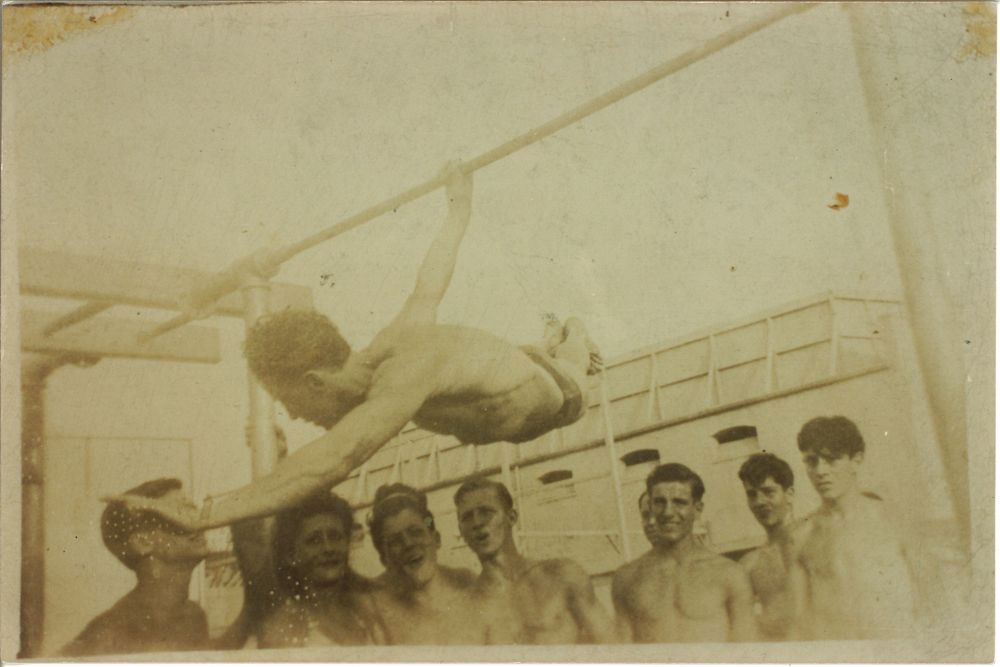
Exercise No. 29 Flag Pole Push Ups

Ever wanted to know how to do flagpole push ups? They're a great workout. But here's the secret to getting results from them, you have to be able to do them on both sides. Got it? Great. Let's get to work!
So, how do you learn? First, you need a good flag pole. You ought to be able to hold yourself out with straight legs for a good ten to fifteen seconds. It's hard, I know, but this will give you the core strength and stability for this challenging movement.
   This is a very involving movement. You need to hold your body in alignment with the pole. If your stomach is facing upwards, you will either dislocate your shoulder, it's going to hurt, or you are superhuman. But then again, I'm super human too. :D
   I recommend before you do these you be able to do a solid amount of handstand push ups, and window wipers. Your core strength is about three quarters of this. And then from there it's your upper body strength.
   When you go into the flag position, you can't let your arm on the top go limp. Hold everything tightly, but control your muscles. It's like a mixture of a pull up and a handstand push up really. In fact, that's what'd I say a human flag pole push up is. A handstand push up and a pull up. Huh, who knew? There you go. Go from there! Enjoy! And practice safely.
   -The Fitness Cookie
   

Friday, August 8, 2014

Muscular Stimulation

I hear questions on how to get bigger, people ask me how to get rid of their chicken arms, how to get six pack abs, how to do all of these things to bring up their physic, make it stronger, bigger, and better looking. So then I'll get questions on why they aren't progressing very fast. Well, to be truthful, it takes time to stimulate your muscles and make them big.
First, we'll check your workout. What are you doing? Is your workout, kind of intense? A bit powerful? Not too hard? But you are getting sore once in a while?
   No, that's not how you do it. With exercise and gains, you have to do things that hurt. Things that leave you sore. After every workout, you need to feel accomplished, powerful, like your body hates you the day after, but when you get back into things for another workout it's thanking you.
   Your intensity level distinguishes the way your muscles are stimulated and the way that they grow. The harder you workout is, the more your muscles will grow. Making your workout harder means you have to change things up every few weeks and make them hard for yourself. That is your objective in working out. You have to challenge your body. The more you challenge your body, you will stimulate muscular growth.
   Over time, you will start to discover that when you do something like, five pull ups, you won't get sore, because it's easy. But say you do, ten front lever pull ups in four sets. The next day your lats and your biceps are going to be a little sore. Well gee, I wouldn't guess! For gains and stimulating your muscles you have to go the rout of high intensity and hard work. The more you put into it, the more you will get out of it. It's very simple.

Wednesday, August 6, 2014

Exercise No. 28 Front Lever Pull Ups

This is a hard but very intense movement that gives you massive amounts of strength and is one of those exercises with body weight that gives you big arms and a big back because it's so difficult. The strain of this move I would say goes through most of your body. It's incredible what it will do and the results it gives you. The muscle groups it works out are your forearms, biceps, lats, shoulder blade muscles, a little of your traps, your abdominals, for holding your legs up your quads, and your obliques.
Also to keep your arms comfortable together your pectorals are slightly engaged.
   Would you like to know how to do these now? I would presume you do. Let us begin.
   First off, for prerequisites, you need to learn how to do a regular front lever and be able to crank out some serious pull ups. Many of the exercises I provide in this blog will give you such benefits and abilities to progress to this movement.
   So first, you must go into the front lever position, for this movement you may need to tuck a leg in at first. Step one is to hold your core tight and strong. When you pull up do not bend your elbows to the side, they must directly go forward in the direction that they face as you go upwards. Keep your chest somewhat rounded and continue on.
   There you go. Front lever pull ups. They're a little simple, but they take time to master because of their difficulty. Have fun and safe practice.

-The Fitness Cookie

Friday, July 18, 2014

Wrist Care

A question from time to time is, "How do I take care of my wrists during exercise?" Not hard. Follow the simple steps The Fitness Cookie uses.
To begin with, your wrists are pretty valuable to you. Everybody has a lifestyle that requires their wrists. Gamers, office managers, chefs, and anyone who goes to the gym. Right? Correct. And everybody else requires their wrists.
   Keep them in good shape, don't abuse your wrists. When doing things that are hard on your wrists, make sure that they are able to stand up to that kind of abuse. As well as you can get wrist supports. A bit of compression and comfort helps a ton.
   Recently I wanted to get some wrist bands to keep my hands dry when I was doing things like flares and power tricks on wooden  floors and when I was on the pull up bar, so I bought some and noticed that just that tiny amount of compression helped them with support and comfort when I was doing jackhammers and flares which are incredibly taxing on the wrists.
   As far as weights go, if you feel the need for wrist supports because of some discomfort during your presses, give it a go.
   Now another thing is, don't hammer relentlessly on your wrists. That's mainly an issue for people who break dance, but build your wrists to the point of being able to take that kind of abuse, don't just jump on and start beating yourself up. You have to built up to everything to avoid injury.
   Good luck and safe training.

- The Fitness Cookie

Thursday, July 17, 2014

One Handed Planche Tutorial

As of being a person to watch street workouts and Asian's break dancing from time to time as well as I've subscribed to some incredibly abstract channels on youtube, I've seen this form of exercise successfully mastered by only five people. Three of them didn't have a leg condition. So yes, there are extra terrestrial life forms on this planet. Myself being from Jupiter, I will teach you how to convert to the ways of the others by knowing how to do the one armed planche as I do.
So first off, you can't come from earth. Just doesn't work. Second, you have to be pretty confident in your planches.
   I can't stress being confident in your planches. Get a bit of a shoulder warm up done as well. You really ought to make those muscles a bit warm because this move is massively taxing on whichever is your fully dominant arm.
   To begin, you need to have a good understanding of your planches. You need to learn the full planche, every variation of the finger tip planche, your one handed handstands must exceed normality, you have to learn flag freezes and get those down, you cannot go on and do this without being able to do planche push ups, you have to be able to planche with fully straight elbows for more than ten seconds, and the word planche must be your free time expression. Let me demonstrate, "What's up man!" "Oh, not much, how about you?" "Just hanging out at the house, doing planche push ups and planches."
   You want to be cool and do on armed planches? Do you want to be superhuman? Well here's how you do it after you've earned your confidence, your planche badge, and the motivation to do this.
   We'll start from the one handed handstand. Hold your balance arm out, lean to the side like you're doing a flag freeze, once you're in the flag position, you have to hold your body to the side of your dominant arm for the sake of your balance, but it gets hard here. You have to bend your elbow, crazy I know, it's superhuman, but you have to bend your elbow in the one handed balance position, lean more on to the heal of your hand, pivot your hips, and flatten your butt out. Hold your body straight as possible, it can be at a bit of an angle.
   When you come in from the flag position, your dominant foot should be considerably close to the ground, but when you pivot your hips, it should lift up and become parallel with the ground. 
   Your hand positioning in this should be to your comfort, try it out in different ways. When you feel the need to attempt in different ways, such as coming off of the ground, hold your body straight, bend towards your dominant side, and lean up onto your hand. Good luck
  
-The Fitness Cookie

Core Workout (From the Top Down)

A strong core is valuable thing in today's society. Just as it was a thousand years ago. So why make it strong? It keeps you out of back injuries and being able to pick yourself up easily, full body control since your core is the main support of your body other than your back. Now lets make it stronger!
I've got some simple core conditioning exercises for on the ground and on the pull up bar. Surprisingly, I'm going to leave crunches out of this because they are entirely useless in my opinion.
   So to begin with, I have beginner, intermediate, and very advanced. Shall we begin?

Beginner:

1. 3 sets of 5 Hanging leg raises. Bring knees up as far as possible to chest.
2. V sit hold for 20 seconds.

Intermediate:

1. 2 sets of 10 extended leg raises. Do not bring knees up, keep legs straight and extend to a hanging L position.
2. 2 sets of 10 hanging leg raises. Knees to chest.
3. 15 Ground leg raises.

Advanced:

1. 2 sets of 10 Toe to bar leg raises.
2. 10 Pull up position leg raises.
3. 5 Window wipers.
4. 15 Swinging window wipers.
5. 30 Ground leg raises.

Very Advanced:

1. 2 sets of 25 Toe to bar leg raises.
2. 20 Pull up position leg raises.
3. 2 sets of 20 Window wipers.
4. 25 Swinging window wipers
5. 15 L sit leg raises.

Shoulder and Elbow Pain With Calisthenics (body weight)

Now I'm going to talk concerning you calisthenics lovers and street workout addicts. I have a deep passion for working out with body weight, but sometimes, your shoulders and your elbows hurt when you learns something new, have over done it, or done something with a cramp, it goes on and on. But I'll point it all out.
There are a lot of bad and messed up things you can do to your body in body weight training. To be honest with you, weightlifting dangers are bigger and scarier because those are more dangerous, but you can wreck joints, rip tendons, fracture bone structures, and tear muscles just as easy in calisthenics.
   So when you have joint pain, you take care of it. You don't just keep going, you're going to make it worse.
   I'll start at the elbows like I did with the last post. Your elbows are important, and connect your forearm which is connected to your hand which either holds onto stuff or pushed you upwards from the ground.
   First, I'll start with the presses and push ups. Your shoulders have a series of tendons leading down to your elbows and then your hands. The tendons in your elbows will sometimes shift, pop, and move around. If they're doing that during a workout, you need to rest a bit, check your form out, and fix things. I really haven't found much in the ways of push ups to cause elbow pain unless it's damage from too many of them, or from something else that happened that has nothing to do with exercise.
   I'm not physician, but when it comes to pull ups and levers, those are dang hard on your elbows if you're doing the super advanced sets and workouts!
   To begin with, one armed pull ups. Those are essentially one handed handstand push ups (I've seen them done) but in reverse. So if you think about it, one handed handstand push ups are incredibly difficult, you're balancing your body, as well as the crushing force of every ounce of your being is resting on your elbow. You're going to want to be careful.
   In a sense, one armed pull ups are harder on your joins than one handed handstand push ups, (hypothetically) because you don't have to use so much of your core balancing yourself which allows you to put more energy into pulling yourself upward, therefor allowing you to exert even more strain into muscles which breaks them down, makes them stronger and denser, but it also puts more strain on your joints.
   Goes for your shoulders too. If you jump into one armed pull ups, you simply aren't able to do them without conditioning your shoulders. But you can mess your shoulders up with these. Bad form in the one arm pull ups is possible. If you hold your shoulder just right, you can mess your rotary cuffs up and hurt yourself. So be prepared, keep a safe number until you know you can handle the worst, and good form. When the injury does happen, (you're working out, something somewhere somehow some way will need some kind of repair time no matter what) you need to give it time, and let it repair itself. If you can work out around the injury, great, keep going.
   Now concerning things with hand balancing techniques and odd and awkward positions for your body, you need to baby your shoulders. For those of you who do hollow backs, or just generally enjoy doing bridges, or possibly bridge push ups, (tutorial for later) because of the position that you are in and your body is not used to that, you can mess your shoulders up.
   I certainly have. I would do hollow backs with straight elbows and the moment I put my shoulders to the max and bent my elbows to get close to the ground, my right shoulder would pop and go out, as well as even if I tried pushing back for shoulder flexibility practice in the bridge.
   In a case of this, don't push yourself to that point of discomfort so you can make yourself tougher and get used to the pain, that's incredibly stupid and I've seen it done. Where you go from here is you work around it. If it corrects itself like my issue did, I'm back into hollow back push ups for instance, but I had to wait.
   Time is medicine here, and if it's a permanent issue, you might as well ditch that exercise and stick to the ones that don't cause you problems. Work around your problems, fix your problems, and you will have no problems.
   The Fitness Cookie

Shoulder Pain For Gym Rats: look at my previous post.